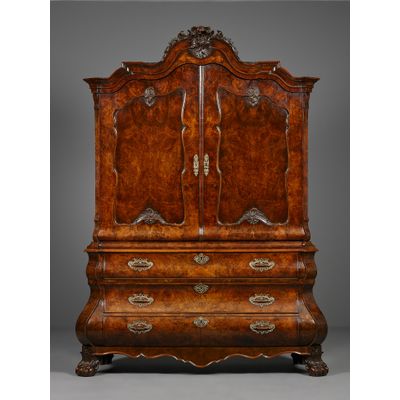
Dutch Louis XV burr walnut cabinet
Price on request
Ships from The Netherlands
Price on request
Artlistings Promise: Authenticity Guarantee, Money-Back Guarantee, 24-Hour Cancellation
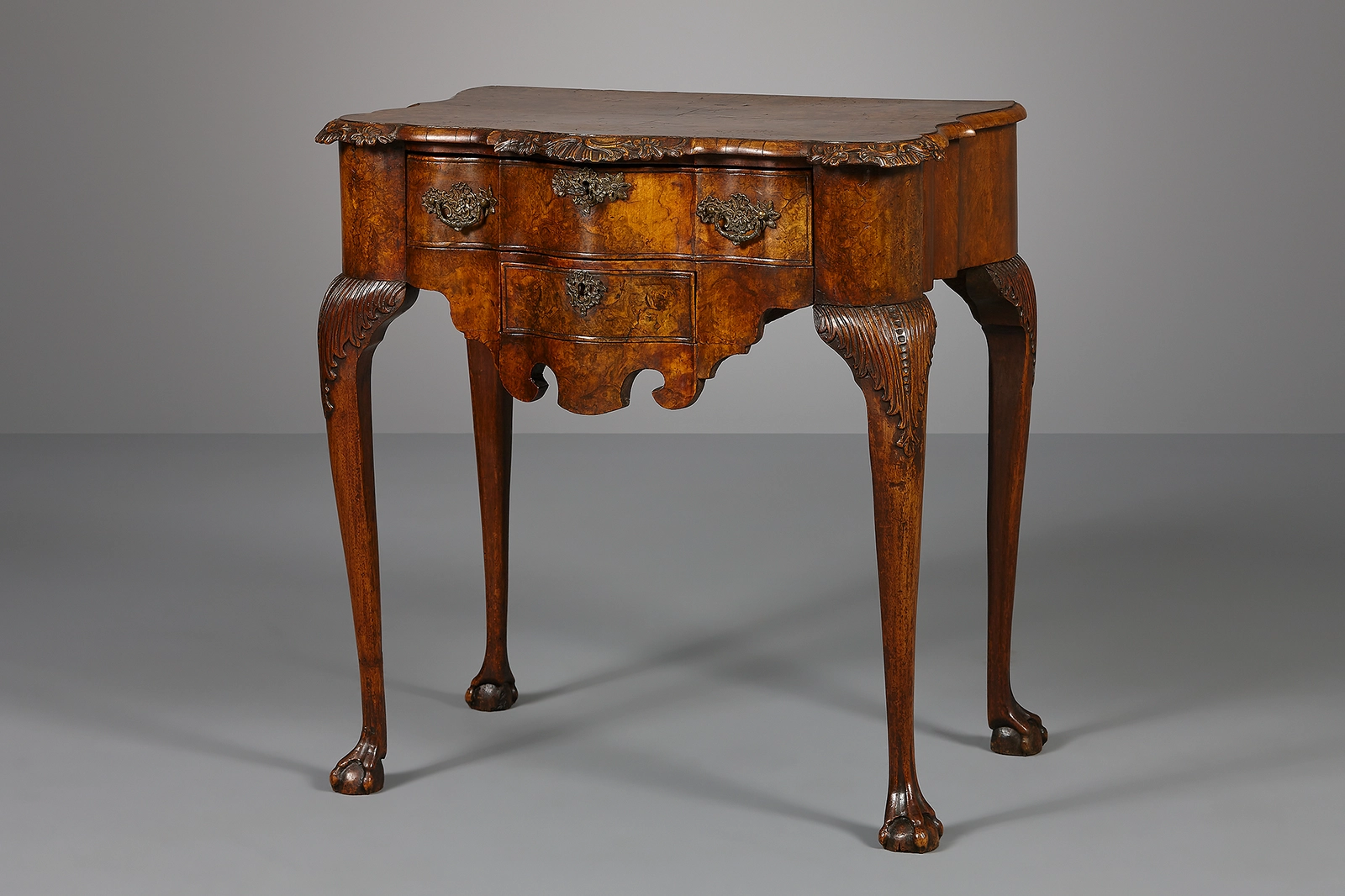
The wall table stands on four high slightly curved cabriole legs ending in gracefully sculpted claw feet. The front, containing the large and small drawers, is powerfully curved. The curved contours continue on both sides. The piece of furniture has two lockable drawers, each equipped with two pulls and a key plate. The overhanging walnut veneered top follows the contours and emphasizes the typical Rococo appearance of the furniture. The pronounced contours of the piece are enhanced by particularly graceful carvings on the edges of the top and on the forward-facing knees.
This table, dating back to around 1745, is undoubtedly a piece of furniture made in the Netherlands but clearly shows a significant English influence. The oak core wood and walnut veneer (at a time when the English were already frequently using mahogany wood). However, the placement of the keyholes at the top of the drawers, the pronounced shape of the legs, as well as the form and material of the brass fittings, bear witness to a strong English influence.
The close political and trade relations between England and Holland from the time of William and Mary (1682-1702) naturally played a role in this mutual influence, but contrary to long-held beliefs, the English influence on Dutch furniture continued thereafter, including in the first half of the 18th century. Hague cabinetmakers were not without reason required from 1711 to produce an "English cabinet" as their masterpiece in order to be admitted to the cabinetmakers' guild.
Dutch Louis XV burr walnut cabinet
Price on request
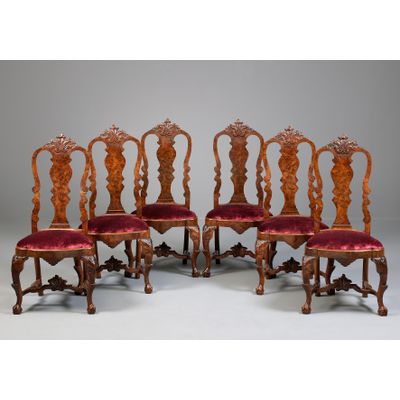
Six Dutch Louis XV Carved Walnut Chairs
Price on request
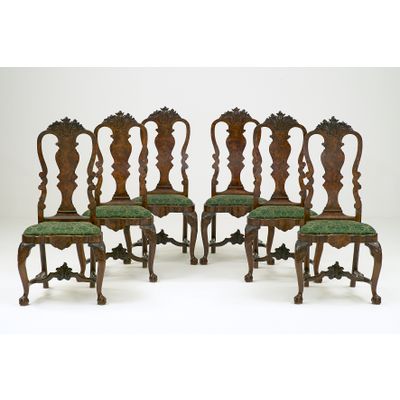
Six Dutch Louis XV Carved Burr Walnut Chairs
Price on request
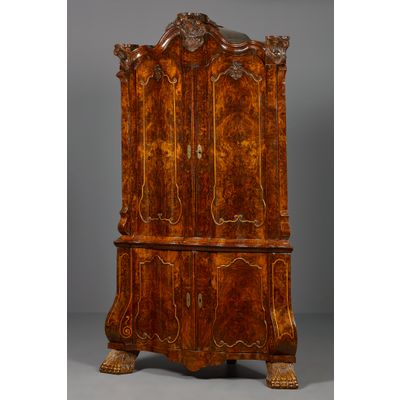
Price on request
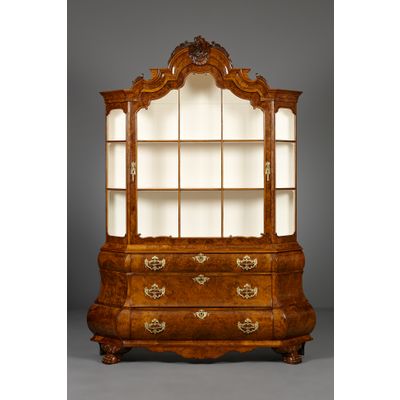
Dutch Louis XV display cabinet
Price on request
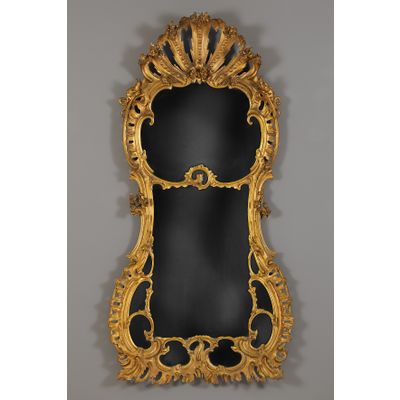
Price on request
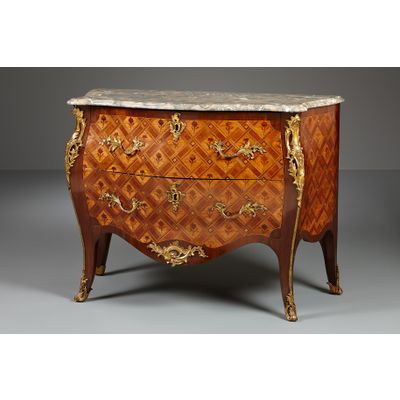
Dutch Louis XV Parquetery Commode
Price on request
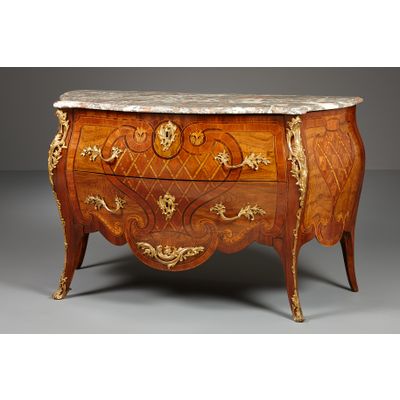
Price on request
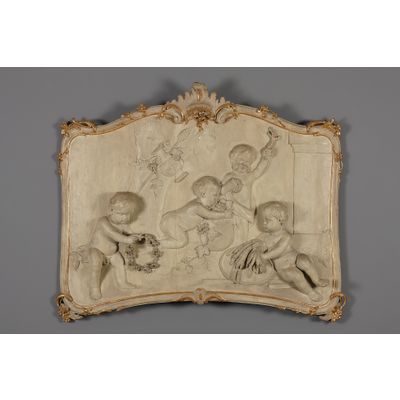
Dutch sculptured Louis XV Dessus de porte
Price on request
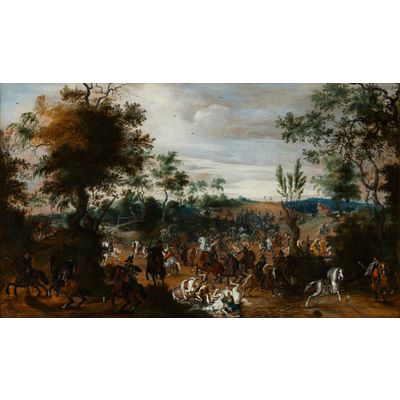
Price on request
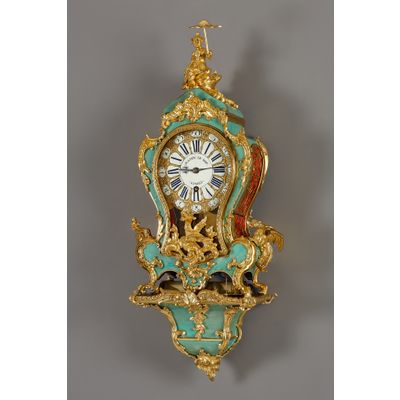
Price on request
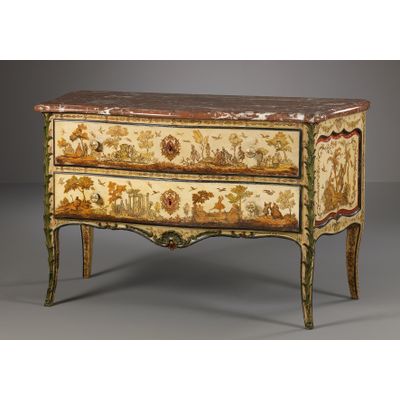
Provencal Louis XV Lacca Povera Commode
Price on request
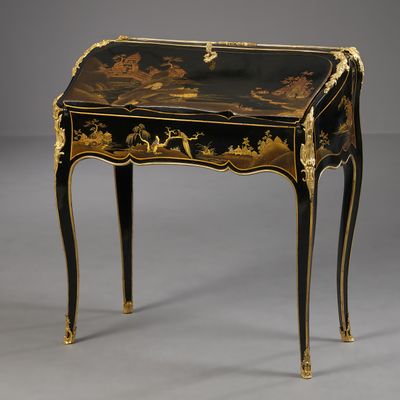
French Louis XV Lacquered Bureau, attributed to J.P. Latz
Price on request
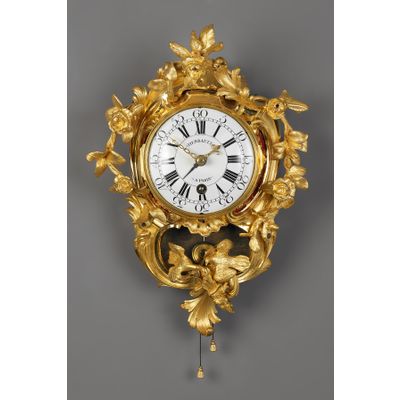
French Louis XV Cartel d'Alcove
Price on request
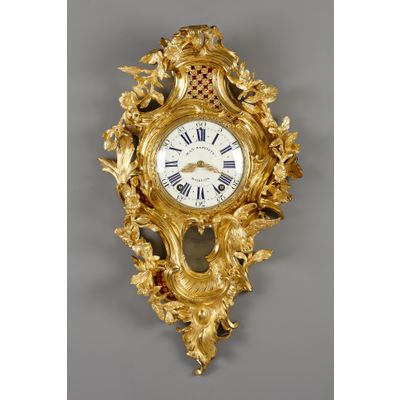
French Louis XV cartel, Jean Baptiste Baillon
Price on request
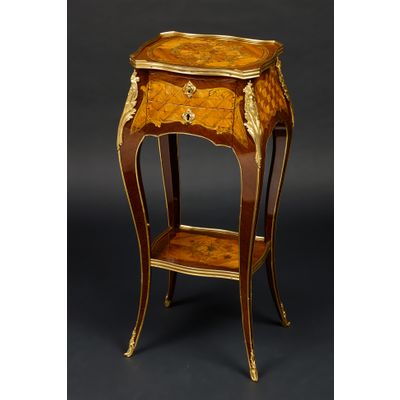
French Transitional Table, Leonard Boudin
Price on request
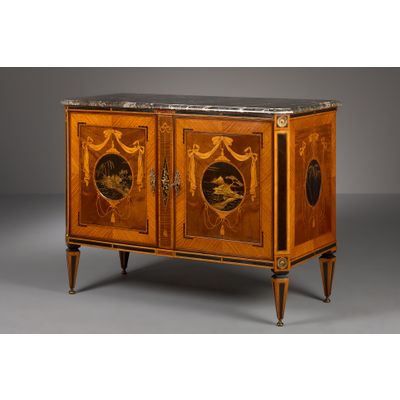
Dutch Louis XVI Commode with lacquer panels
Price on request
Six Dutch Louis XV Carved Burr Walnut Chairs
Price on request
Six Dutch Louis XV Carved Walnut Chairs
Price on request
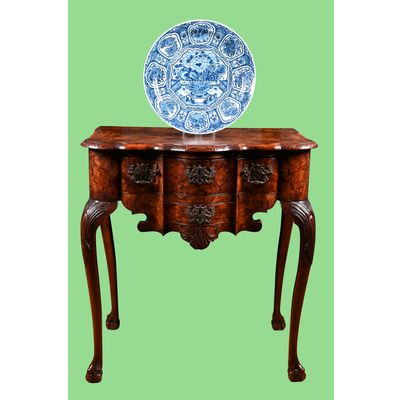
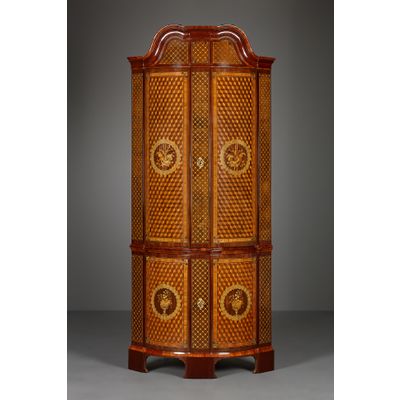
Dutch Transition corner cabinet
Price on request
Price on request
Dutch Louis XV display cabinet
Price on request
Price on request
Price on request
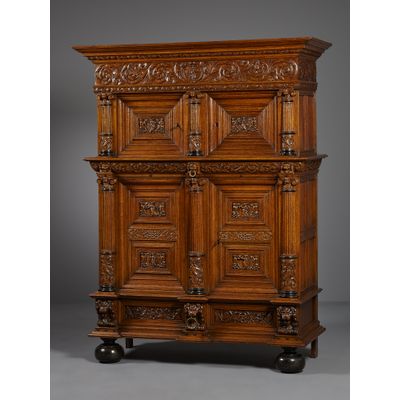
Dutch Renaissance column four-door cupboard
Price on request
Price on request
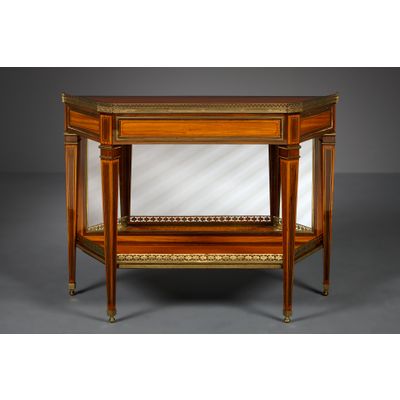
Dutch Louis XVI ‘Console Desserte’
Price on request
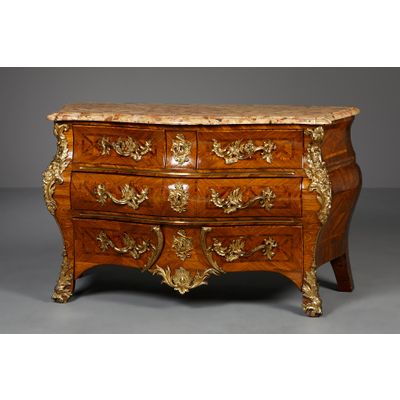
French Louis XV Commode en Tombeau
Price on request
Price on request