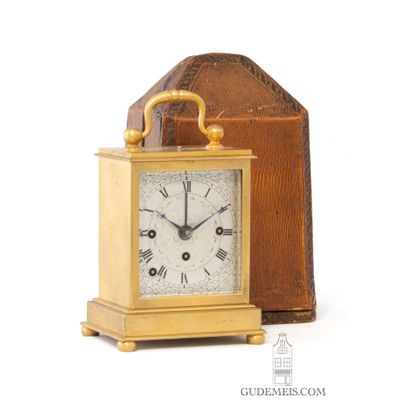
A small Austrian grande sonnerie travel clock, circa 1850.
€ 4500
Ships from The Netherlands
€ 12000
Artlistings Promise: Authenticity Guarantee, Money-Back Guarantee, 24-Hour Cancellation
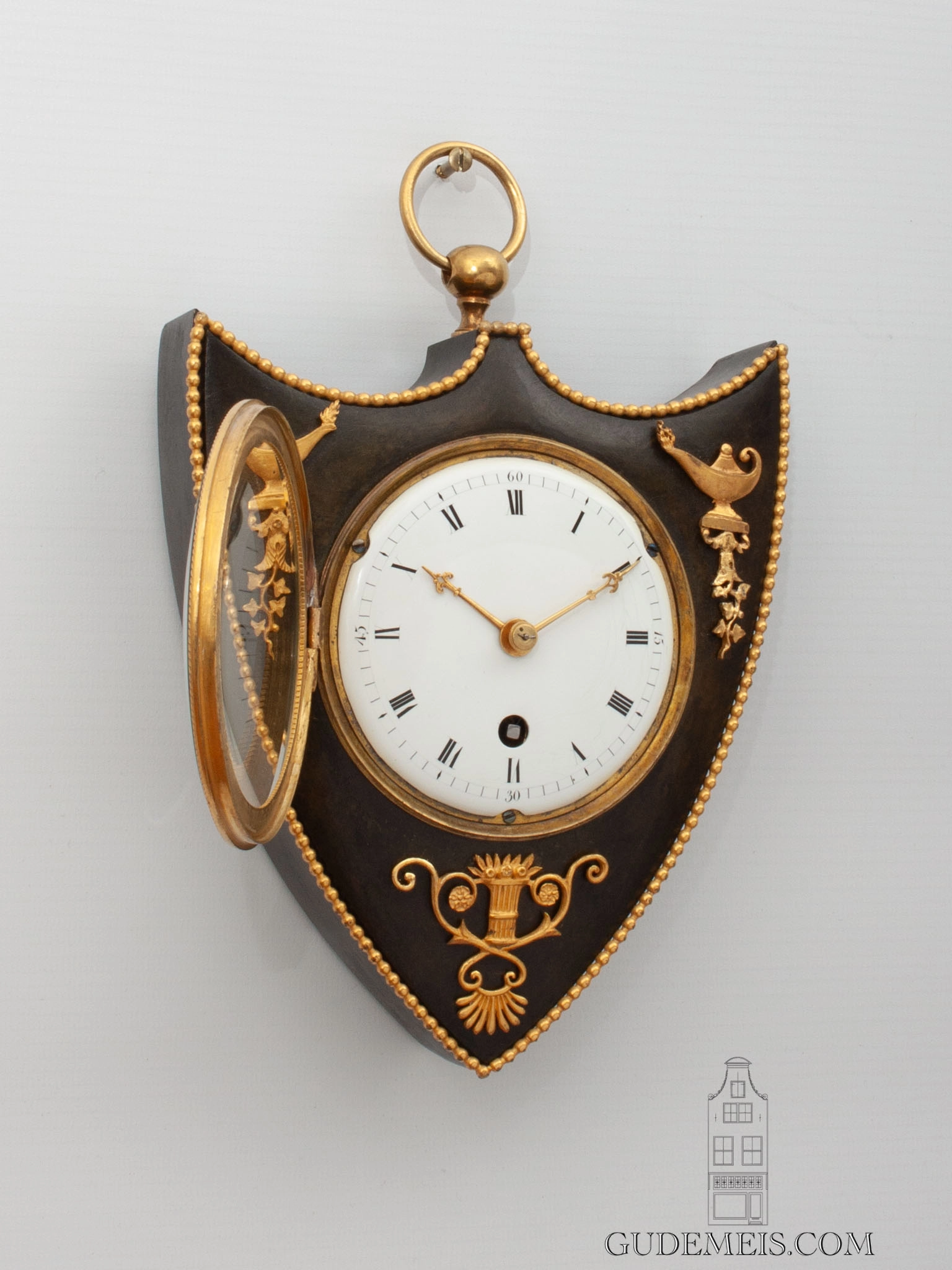
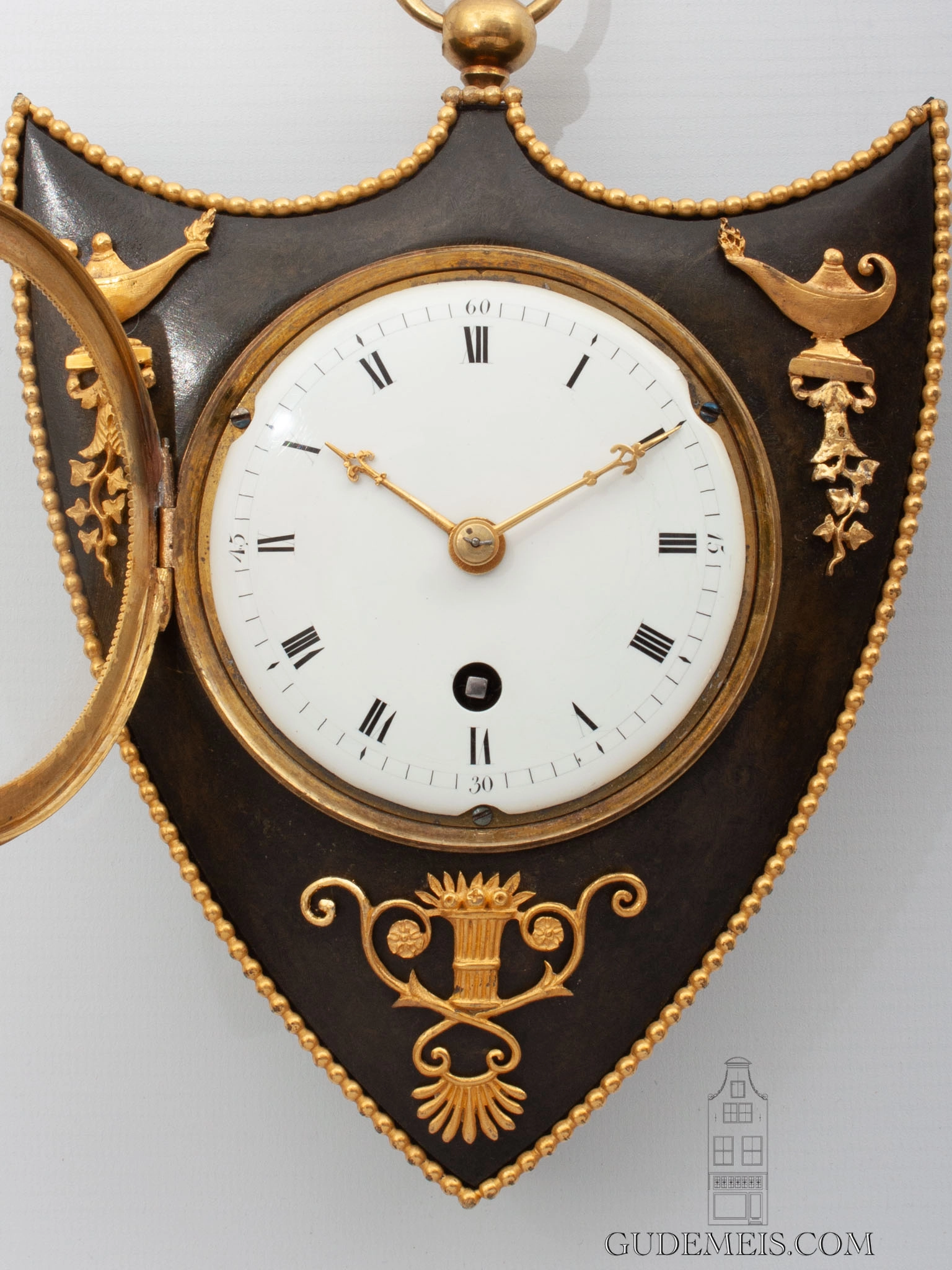
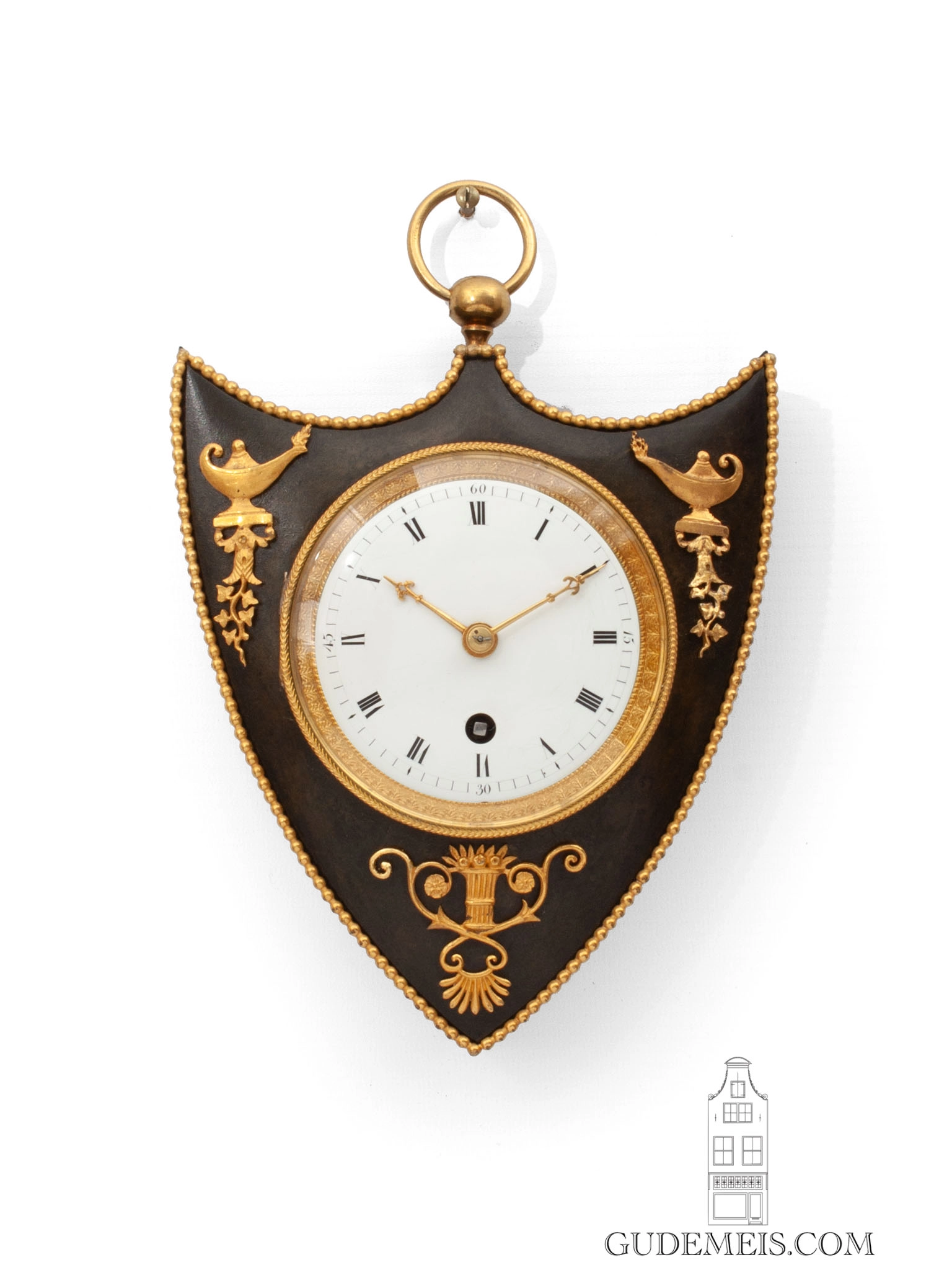
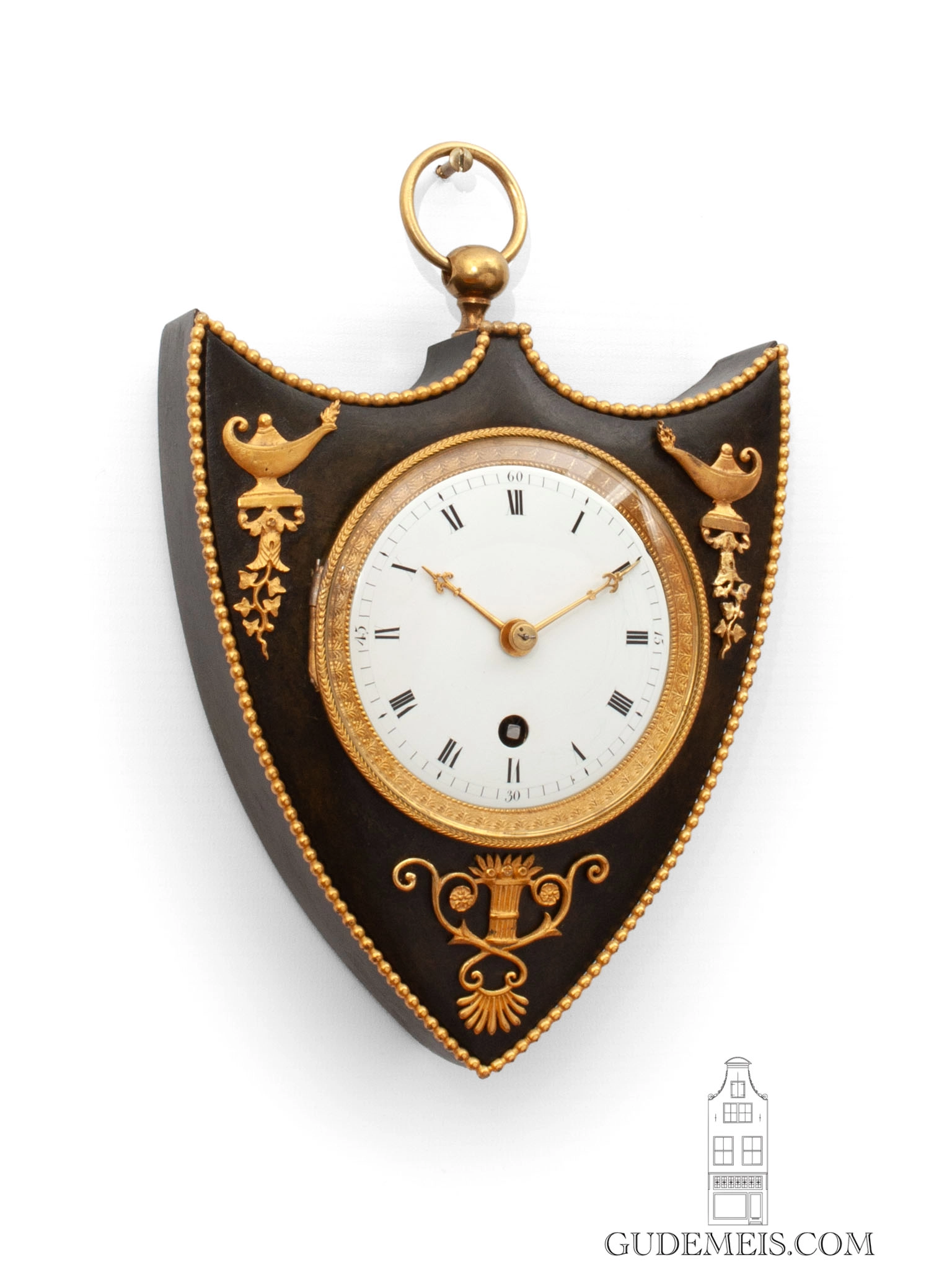
French wall clocks that are more or less an ornament are called ‘cartel’. In the Louis XV or rococo period these clocks have C- and S- scrolls. In the subsequent Louis XVI period this type of clock is often adorned with classical elements like the ‘urn’, ‘garland’ and ‘lion mask’. In the Empire period this type of wall clock is much less common. Most cartels of this period are annular shaped and are also called ‘Oeuil du Boeuf’ or Bulls’eye. Only very few have this elegant ‘shield shape’. Therefore this small clock isn’t only attractive but also very rare.
The 8-cm enamel dial has Roman numerals and Arabic numerals for the quarter indication. The engraved and pierced hands are made of gilt brass.
The typical French movement is driven by a spring barrel and a duration of eight days. This means that the clock needs to be wound once a week. It is being regulated by anchor escapement in combination with a silk suspended pendulum. It is likely that this clock was meant for the sleeping quarters because of its small dimensions and the omission of striking work. These bedroom clocks are called ‘cartel d’alcove’.
The shield shaped case is made of patinated bronze and is surmounted by a suspension ring. It is lined with a gilt pearl rim and the case itself has classical gilt mounts.
A small Austrian grande sonnerie travel clock, circa 1850.
€ 4500
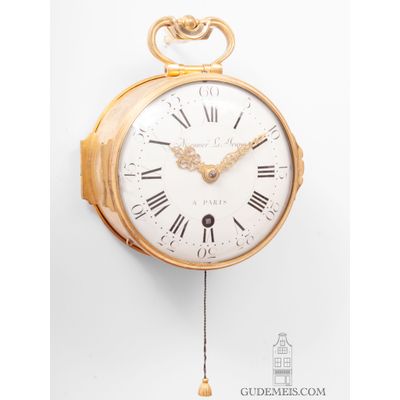
A rare French Louis XVI quarter repeating wall clock, Meunier Le Jeune, circa 1770.
€ 15000
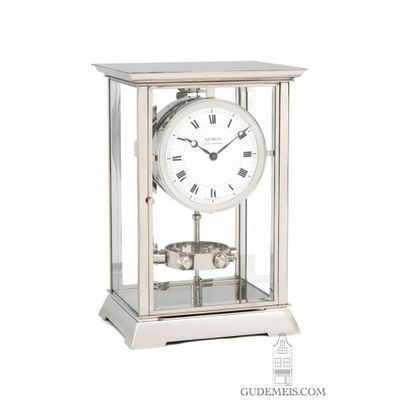
A French Art Deco nickel plated Reutter patent atmos clock, circa 1933
€ 15000
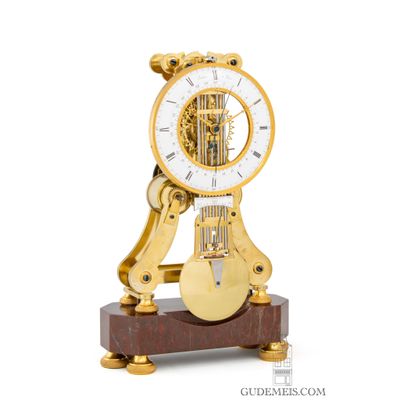
A fine French Directoire skeleton table regulator, Robert Robin, circa 1800
€ 45000
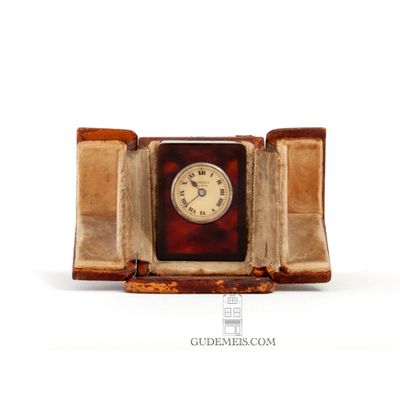
A sub miniature French Art Deco travel clock, circa 1920
€ 4250
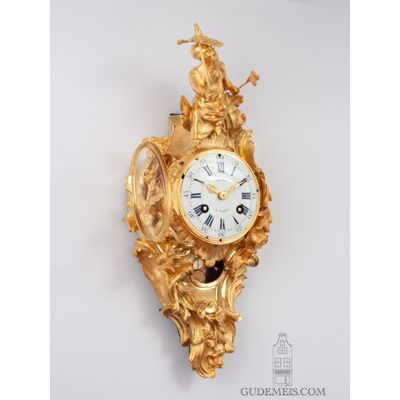
A fine French Louis XV ormolu cartel wall clock, Décle A Paris, 1754
€ 24000
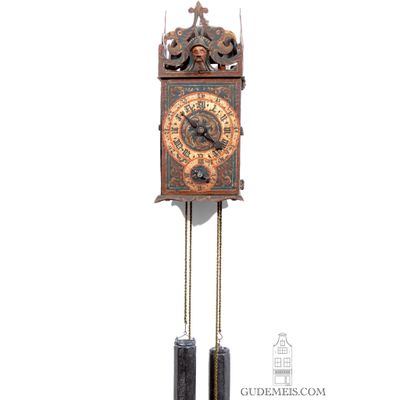
An early South German polychrome automaton wall clock, circa 1590.
€ 26000
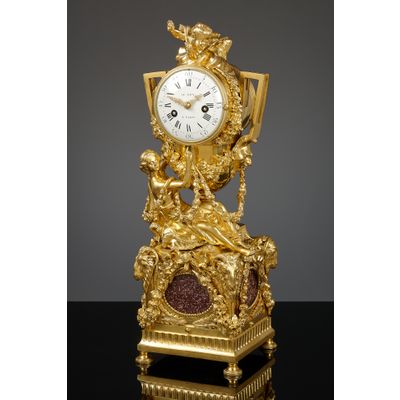
Price on request
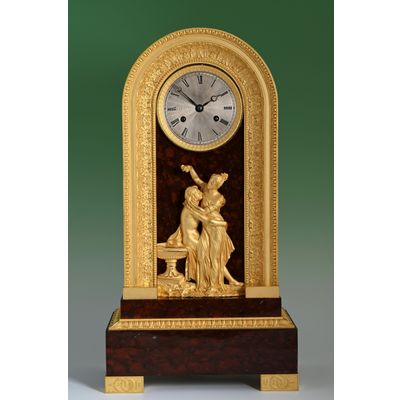
A French Empire ormolu pendule
€ 4750
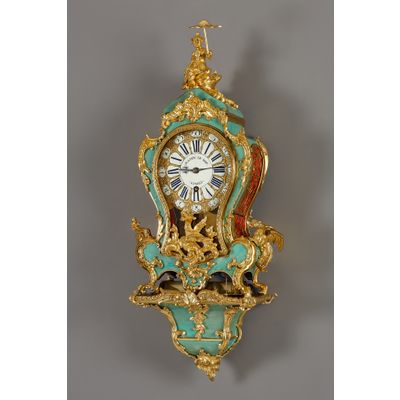
Price on request
A sub miniature French Art Deco travel clock, circa 1920
€ 4250
A fine French Louis XV ormolu cartel wall clock, Décle A Paris, 1754
€ 24000
A rare French Louis XVI quarter repeating wall clock, Meunier Le Jeune, circa 1770.
€ 15000
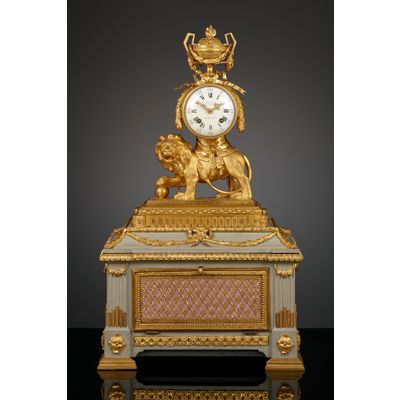
French Louis XVI lion mantel clock with musical box
Price on request
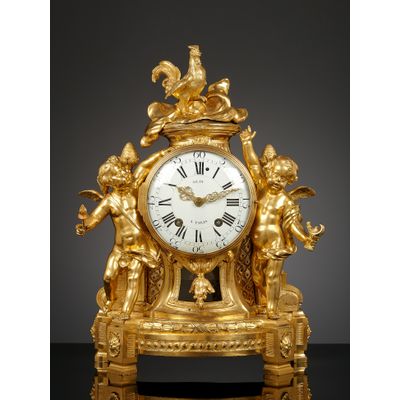
Price on request
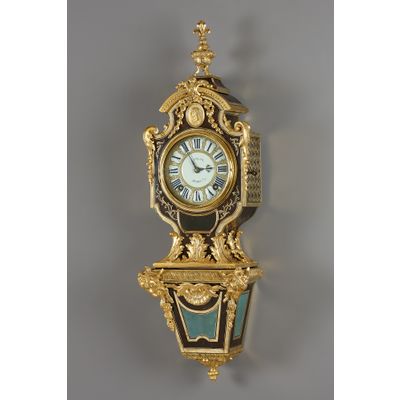
French Régence console clock, Talon
Price on request
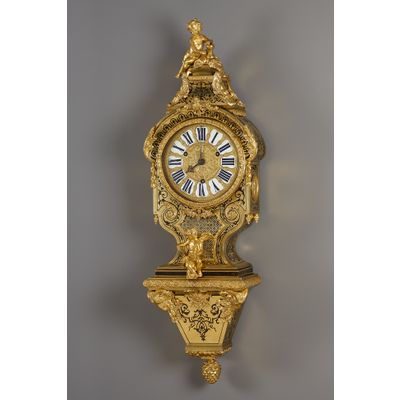
French Régence console clock, Masson
Price on request
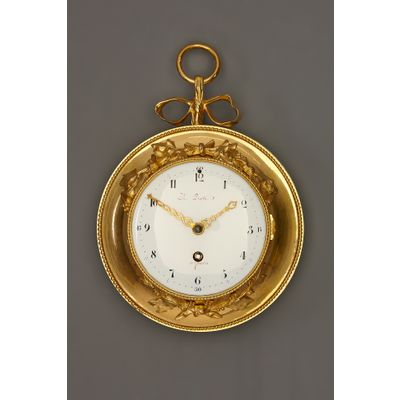
French Louis XVI oeil de boeuf cartel
Price on request
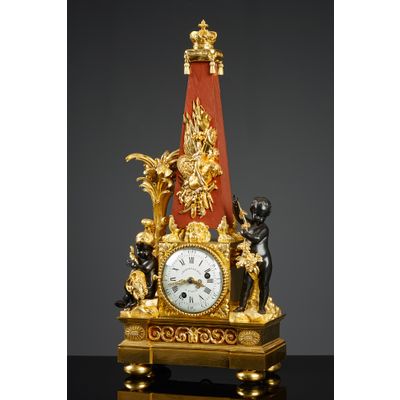
French Louis XVI pendule after a design by Vion
Price on request
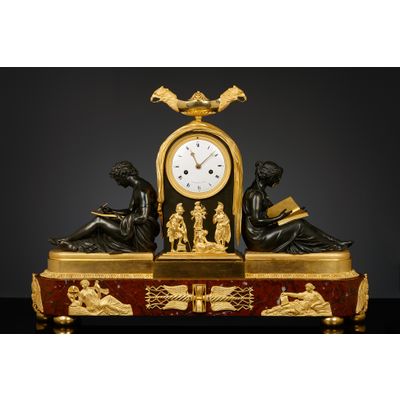
French Empire Mantel Clock, l'étude et le philosophie
Price on request
Price on request
Price on request